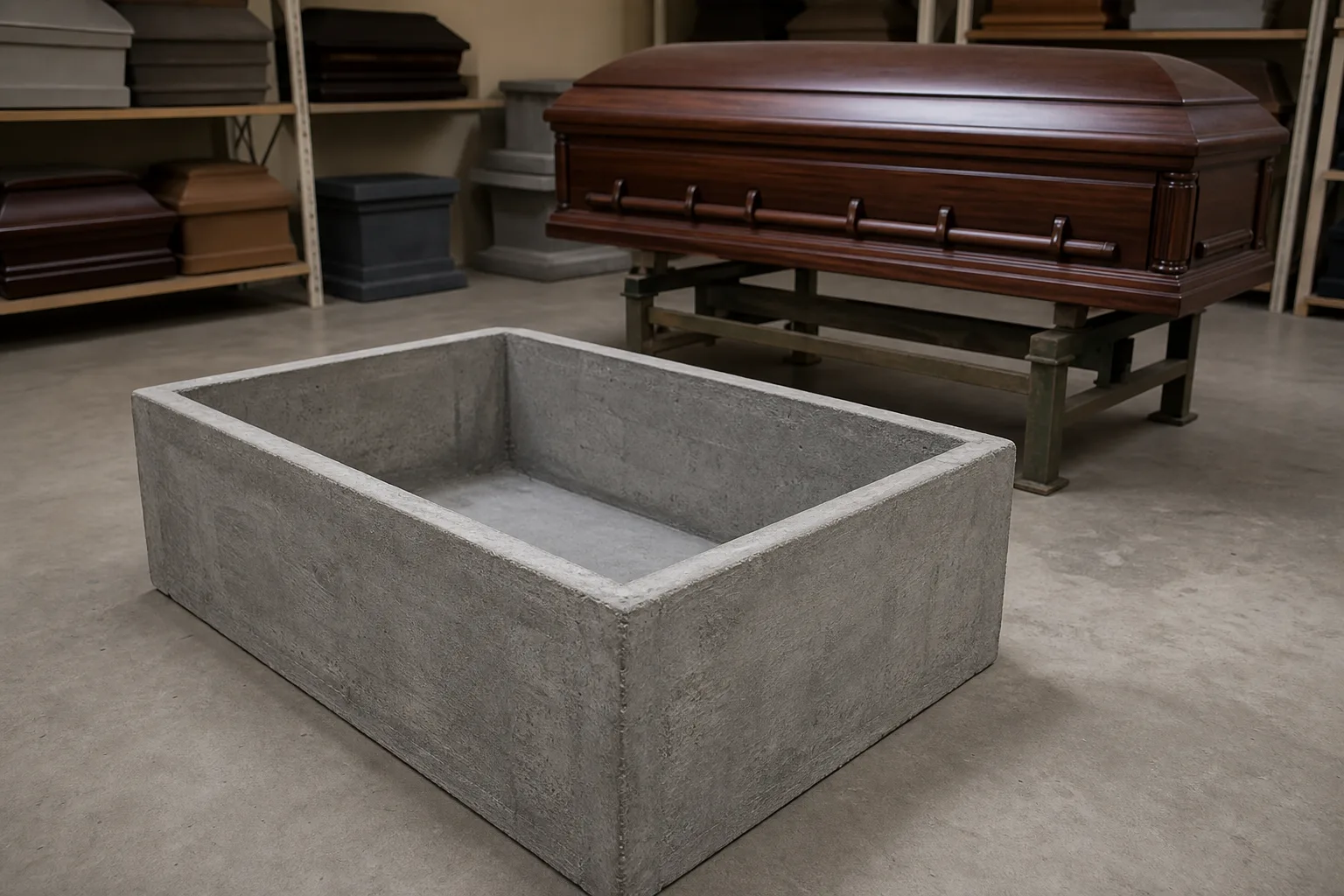
State law rarely mandates an outer burial container. The cemetery usually does, in writing, and its rules are the ones you should read before you buy anything.
The concrete box goes into the ground before the casket does, and it is one of the few purchases in a funeral arrangement where the requirement genuinely comes from somewhere outside the funeral home. That matters, because the answer to who requires it changes what you can negotiate, what you can decline, and where you can buy. There are three separate sources of pressure at work: state statute, the cemetery's own grounds policy, and the way the item is presented to you at the arrangement conference. They are not the same, and separating them takes about ten minutes of asking.
What state law actually says
In most of the country, no state statute requires an outer burial container for a standard earth burial. Vault requirements are largely absent from the burial and cemetery sections of state codes, which tend to concern themselves with disposition permits, transport, embalming under narrow conditions, and cemetery licensing. There are exceptions and local variations, including rules that attach to specific ground conditions, high water tables, or burial in particular municipal grounds. If a funeral director tells you the state requires the container, the reasonable next step is to ask which statute, and then to ask the cemetery the same question independently.
The Federal Trade Commission is the agency responsible for the rule governing how funeral goods and services are priced and disclosed, and that rule addresses this exact confusion. A seller may not tell you that state or local law requires an item when it does not, and outer burial containers carry a specific written disclosure explaining that the requirement, where it exists, generally comes from the cemetery rather than from law. If the disclosure is missing from the price list you were handed, ask for it.
Where the requirement usually comes from
The cemetery. Grounds policy is a private contract term, printed in the rules and regulations you receive with the interment right, and it exists for a practical reason: an unsupported casket eventually collapses under soil weight, the grave surface sinks, and the cemetery has to regrade, reseed, and reset markers, sometimes for years. A rigid container spreads the load and keeps the lawn flat enough to mow with heavy equipment. Cemeteries that require nothing at all tend to be older municipal grounds, rural church yards, family plots, and conservation or natural burial grounds where uneven ground is expected and accepted.
The distinction the cemetery draws is usually between a grave liner and a vault, and the two are not interchangeable in its eyes or in yours. A liner is typically an unlined concrete box or a set of concrete sections with a lid, meant to carry soil load and nothing more. A vault is a heavier one-piece container, often with a sealing gasket, an inner lining of plastic or metal, and a manufacturer's warranty against certain kinds of intrusion. Most cemeteries that require anything will accept the plainest liner on the market.
What to ask the cemetery office directly
Call the cemetery, not the funeral home, and ask five things in plain language. Does this cemetery require an outer burial container for the section where the grave is located. Will a basic grave liner satisfy the rule, or does the section require a full vault. May the container be purchased from a third party and delivered here. Does the cemetery charge a separate fee for setting the container or for receiving one it did not sell. Is the requirement written in the rules and regulations, and can a copy be emailed. Ask for the answers in writing, and note who gave them.
How the pricing works differently from caskets
Casket price ranges are wide because materials and finish vary enormously, and because the object is on display and chosen partly by eye. Outer burial containers are more nearly a commodity, and the spread between the cheapest and most expensive option in a given showroom is usually narrower in absolute terms, though the percentage jump from a plain liner to a lined and sealed vault can be steep. Two costs travel with the container and do not appear on the casket side of the bill: delivery to the cemetery, and the cemetery's own setting or handling charge. Ask for both numbers before you compare anything.
A careful reader ends up with three documents: the funeral home's general price list with the outer burial container section and its disclosure, the cemetery's written rules for the specific section of ground, and a quote that separates the container from delivery and setting. With those in hand the decision is small, factual, and yours.